

The web is abundant on resources about applying for Schengen tourist visas but there isn’t much detail about getting a long-term Study Visa with Italy as the entry point. This is my personal experience in getting it from the Philippines.
There are two ways of doing it. Either you apply directly to the Italian Embassy or via its authorized third party provider, PIASI. The faster route is to apply via PIASI as it will take you several months just to secure an appointment with the Italian Embassy. Remember, Italy is such a popular tourist destination, with hardly any lean travel season, thus, the volume of visa applications they receive is rather huge. The application I will be describing here is my experience with PIASI when I applied in July 2015.
Step 1. Call PIASI to Book an Appointment
I called their Premium line via my Globe mobile number. During the time that is the only way to secure an appointment. It is Premium for a reason, as it costs Php32 per minute. No problem of waiting too long for appointment dates, they can schedule one for you right away, after checking your intended date of departure. I applied quite early, July 1 for a targeted departure of Sep 21.
Step 2. Submit all requirements on the appointed date
I went to the VIA Center in Chino Roces Extension. Complete address is given below:
3rd Floor, Allegro Center
2284 Chino Roces Extension
Magallanes, Makati City
Once inside, a guard will give you a queue number. He will also give you a photocopy of the list of requirements for your desired visa. Bring photocopies of your documents so as not to be inconvenienced. They also have a photocopying service at that area beside the guard which is rather pricey. Here are the requirements which I have submitted for my long-term study visa.
- Visa Application Form (Click here)
- Passport-size picture
- Passport
- Letter of Acceptance from the university
- Hotel booking
- This will serve as the temporary accommodation in the absence of a permanent accommodation which had to be arranged upon arrival in Italy. This is important as they really have to know where you will be staying the moment you land at Italy.
- They did not say that I book for a week, I just thought that it was sufficient time for me to find a permanent place in Italy. They didn’t question the length of time of my temporary booking anymore.
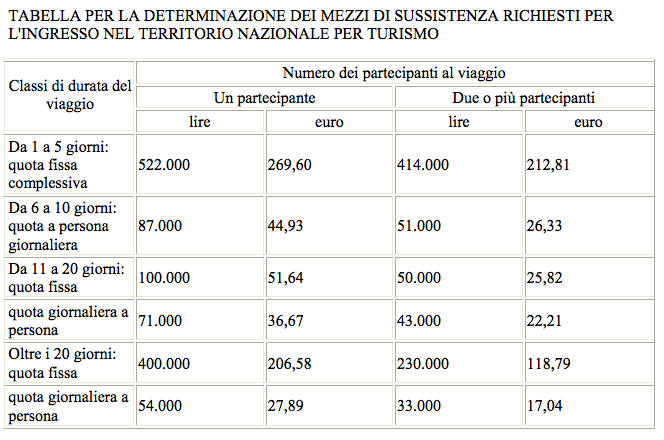
- Proof of sufficient means of subsistence while in Italy
- In my Letter of Acceptance from my university, it was indicated that I will be getting an Erasmus+ scholarship which will finance my studies. I also submitted the Acceptance Letter from my program which contains all monetary awards.
- On top of this, I had to submit a Bank Certification indicating my cash in bank to cover my expenses for the 1st month of my stay in Italy as I intended to arrive 1 month before the start of classes, after which, my funding will take effect. Refer to the following for the necessary amount needed depending on your length of stay.
- Flight Booking
- To establish the departure date and airport of entry
- Health Insurance
- My Letter of Acceptance also served as my health insurance as it also covers my insurance in Italy
I was told that processing takes 10-14 working days. Here, they also asked me for the delivery address of my passport. They did not get my biometrics as it is not required for long-term study visa applicants maybe because those were done when I applied for my Permesso di Soggiorno (Permit to Stay) once I arrived in Italy.
Step 3: Pay the visa processing fee
Once all the documents are in order, you will be instructed to pay the visa processing fee at the cashier. If I remember it correctly, I paid about Php1,400 for my transaction.
Step 4: Personally receive the delivery of your passport or authorize a representative
Once approved, your passport will be delivered at the address you indicated. Take note that only you or an authorized representative (should have an authorization letter with your signature and copy of your ID) can receive your passport. As for my case, the first attempt at delivery was unsuccessful because I did not leave any authorization and I was not home when it arrived. I learned about it when I called PIASI asking for the status of my visa. So, better make sure that you leave a letter of authorization for somebody else to receive it on your behalf if you cannot guarantee that you’ll be at home all the time.
Along with my passport, they also returned my Acceptance Letter from the university.
Note that the whole process was completed without me ever going to the Italian Embassy. It was actually a very smooth one for me.

 Happiness.NOW